
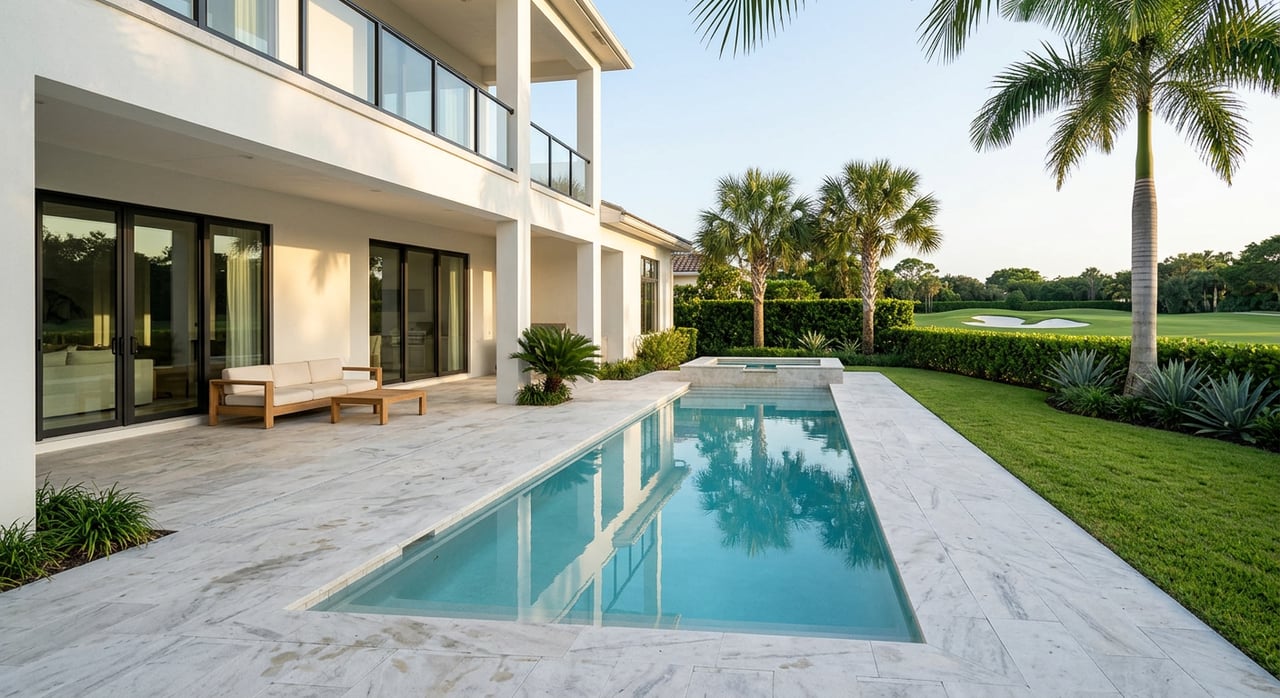
If you are deciding between a golf community and a non-golf neighborhood in Estero, you are not alone. With so many gated options, private clubs, and amenity-rich villages, it can feel hard to compare apples to apples. The good news is you can make a confident choice once you understand how memberships work, what fees you will actually pay, and how each option affects your lifestyle and resale. In this guide, you will see clear definitions, real local examples, simple cost math, and a buyer checklist you can use before you write an offer. Let’s dive in.
Estero at a glance
Estero is a fast-growing Gulf Coast village with a strong base of retirees and seasonal residents. Recent U.S. Census estimates show a population topping 38,000, and about 50.7% of residents are 65 or older, which helps explain why many neighborhoods focus on low-maintenance living and active amenities. You will find everything from bundled golf clubs to amenity-focused, non-golf gated communities within a short drive of beaches and shopping. Home values vary widely by community and housing type, but many buyers target the mid to upper price ranges depending on features and club access.
For demographics and community context, review the latest U.S. Census QuickFacts for Estero village. You will see why social amenities, fitness, and convenient maintenance are common priorities here. U.S. Census QuickFacts: Estero
Community types in Estero
Bundled golf communities
In a bundled golf community, membership is tied to homeownership. You automatically receive golf and social rights when you buy, and you typically avoid a large upfront initiation fee. You still pay annual dues and may have food and beverage minimums. Learn the basics of bundled memberships here: What does bundled golf mean.
Local examples many buyers explore include Pelican Sound Golf & River Club, Copperleaf at The Brooks, and Stoneybrook. These neighborhoods tend to attract seasonal residents and recreational golfers who want country-club access without a separate six-figure initiation.
Equity or private golf clubs
Equity or private clubs operate as separate entities with a one-time initiation (sometimes refundable in part) plus annual dues. Memberships may be capped, which can improve tee-time access and exclusivity. Some Estero clubs offer social membership for residents and a limited number of optional, full golf memberships.
Local examples include Grandezza, Wildcat Run Golf & Country Club, West Bay Club, and nearby Miromar Lakes. These typically fit frequent golfers who value guaranteed access and are comfortable with higher carrying costs.
Non-golf gated communities
These neighborhoods include pools, fitness, tennis or pickleball, and strong social programming, but do not operate a golf course. Carrying costs are often lower than golf communities, though fees still vary. Popular Estero choices include Bella Terra, Cascades at Estero (55+), and Verdana Village.
Non-gated neighborhoods
Traditional subdivisions and mixed neighborhoods often feature lower fees and fewer centralized amenities. These can be a great fit if you prefer a larger lot, lower ongoing costs, or proximity to off-site recreation and public facilities.
What it costs and how to compare
Common fees you will see
- HOA or master association fees. These cover gates, landscaping, common areas, and shared amenities. Amounts vary by community and product type.
- Club initiation or capital contribution. Common at equity clubs. This is a one-time payment and may be fully, partially, or not refundable depending on club policy.
- Annual club dues. Recurring operating fees to maintain the course, clubhouse staff, programming, fitness, pools, and more. In bundled communities, this may be within the HOA dues or billed separately.
- Per-round and cart fees. If you are not on a plan that covers carts, you will pay a fee per round. See typical bundled vs pay-to-play differences here: Bundled golf basics.
- CDD assessments. Many newer master-planned neighborhoods use a Community Development District to fund infrastructure. CDD assessments are not optional and appear on your property tax bill. Ask for the current assessment and payoff schedule. Learn how CDDs work: Florida CDD guide.
Fees and membership terms change. Always confirm current amounts and policies with the association or club before you make a decision.
Quick break-even golf math
Use this simple approach to estimate your best fit:
- Estimate your rounds per year. Be honest about how often you will play.
- Price your options:
- Pay-as-you-play: green plus cart fees.
- Bundled community: annual dues or HOA portion covering the club, plus any food and beverage minimum.
- Equity club: initiation fee amortized across your expected ownership years, plus annual dues and food minimum.
Illustrative example numbers to show the math:
- Pay-as-you-play: assume $60 to $80 per round including cart. At 30 rounds per year, that is about $2,100. Reference general guidance here: Bundled golf overview.
- Bundled community: annual costs can range widely, often from roughly $4,000 to $13,500 depending on community and membership level. If you only play 10 to 20 rounds, your cost per round may be higher than public play, but you are also buying the social scene and convenience.
- Equity club: a $30,000 initiation amortized over 10 years is $3,000 per year. Add, for example, $8,000 in annual dues, plus any food and beverage minimum. Your baseline could be $11,000 per year before cart fees.
Rule of thumb: If you play fewer than about 15 to 25 rounds per year, a non-golf community or public play often costs less. If you play weekly or more, an equity or full-dues bundled option can make sense, especially if tee-time access matters.
Lifestyle and amenities to weigh
- Tee-time access. Equity clubs with membership caps can offer more predictable access, while bundled clubs may be busier in peak season.
- Social programming. Most clubs and gated communities offer events, dining, and fitness classes. Compare calendars, guest policies, and rental rules.
- Maintenance and convenience. Bundled and non-golf gated neighborhoods often include landscaping and exterior maintenance for certain property types. If you are a seasonal resident, this can reduce hassle.
- Off-site recreation. If you prefer pickleball, beaches, boating, or travel over golf, a non-golf community with strong amenities could fit your lifestyle and budget.
Resale factors that matter
When golf adds value
Research shows that golf course frontage and appurtenant memberships can support price premiums, though results vary by market, view, and club health. Some studies find small to notable premiums for prime course-front lots, while others show more modest effects. See examples of the literature here: Golf courses and house prices and a local-focused study on appurtenant memberships: Appurtenant memberships and value.
Risks to watch
- Course closure or club solvency. Communities rely on a viable long-term model. Evidence shows closures or poorly maintained courses can drag on nearby home values. Learn more about the risk context here: Course closure impacts.
- Special assessments and deferred maintenance. Clubs and associations may levy assessments to fund improvements. Review budgets, reserve studies, and recent meeting minutes.
- Transferability and waitlists. Some private clubs cap membership or control transfers, which can affect your access and potential resale pool.
Industry trends to keep in view
The golf industry has been improving maintenance efficiency through better environmental practices, which can help manage long-term costs. This includes refined water management and inputs. See a sector snapshot: GCSAA maintenance efficiency survey.
Due diligence checklist
Before you write an offer, ask your agent to help gather and review these items:
- HOA and club governing documents. Declaration, bylaws, rules, current budget, most recent audit, reserve study, and the last 12 months of board minutes. Florida statutes outline association record and disclosure rules. Review Chapter 720 for HOAs and Chapter 718 for condominiums: Florida association statutes.
- Estoppel certificate. Confirms outstanding assessments, transfer fees, and pending litigation for associations subject to Florida’s estoppel rules.
- Club membership package. Ask for the membership agreement, initiation and refund policy, current member count, waitlist status, dues schedule, historical increases, and whether the membership is deeded and transferable.
- CDD disclosure. Request the current annual CDD assessment, remaining debt service years, and operations and maintenance line items that will appear on the tax bill. What a Florida CDD does.
- Insurance and inspections. For condominiums and club facilities, confirm compliance with Florida milestone and structural inspection requirements, which can impact assessments and insurance. Overview: Florida milestone inspections guide.
Key questions to ask the seller, HOA, and club:
- Is the golf membership included with the deed, optional, or fully separate?
- Are there any pending special assessments or capital projects?
- How many active golf members are there relative to the cap? Are there waitlists?
- What has been the pattern of dues or HOA increases over the past 3 to 5 years?
- What are the rental rules and minimum lease terms, if any?
Decision guide: find your fit
Use this quick matrix to narrow your options:
- You play fewer than 15 to 25 rounds per year and want cost control. Consider a non-golf gated or a non-gated neighborhood. Use public courses or occasional guest play.
- You play around 25 to 60 rounds per year and want convenience without a large initiation. A bundled golf community can work well, especially if you value on-site dining and social life.
- You play 60+ rounds per year or want guaranteed access and exclusivity. An equity or private club may be justified. Do the full math including initiation amortization, annual dues, and food and beverage minimums.
Next steps
Choosing between golf and non-golf living in Estero comes down to your play frequency, social priorities, and budget for ongoing fees. If you want help comparing specific neighborhoods, fee structures, and resale patterns, reach out for tailored guidance and recent local comps. Connect with Amber Reyes to map your options and tour the communities that fit you best.
FAQs
What is a bundled golf community in Estero?
- It is a neighborhood where club rights come with the home, so you skip a large initiation but pay annual dues and any food and beverage minimums. See an overview: Bundled golf basics.
How do equity club costs compare to bundled golf?
- Equity clubs usually charge a one-time initiation plus annual dues, while bundled golf ties membership to ownership with annual dues only; frequent players may justify equity, but occasional players often prefer bundled or public play.
What is a CDD fee and why does it matter?
- A Community Development District funds infrastructure and charges a non-optional assessment on your property tax bill; ask for the current amount and payoff schedule to understand your carrying cost. Learn more: Florida CDD guide.
Do golf course homes in Estero hold value better?
- Studies show possible premiums for course frontage and appurtenant memberships, but results vary by view quality, club health, and fees; always evaluate the specific community and financials. References: Golf and prices and Appurtenant membership study.
What risks should I check before buying in a golf community?
- Review for special assessments, deferred maintenance, course viability, membership caps and transfers, and compliance with Florida association rules; these factors can affect both lifestyle and resale. See context on closures: Course closure impacts.