
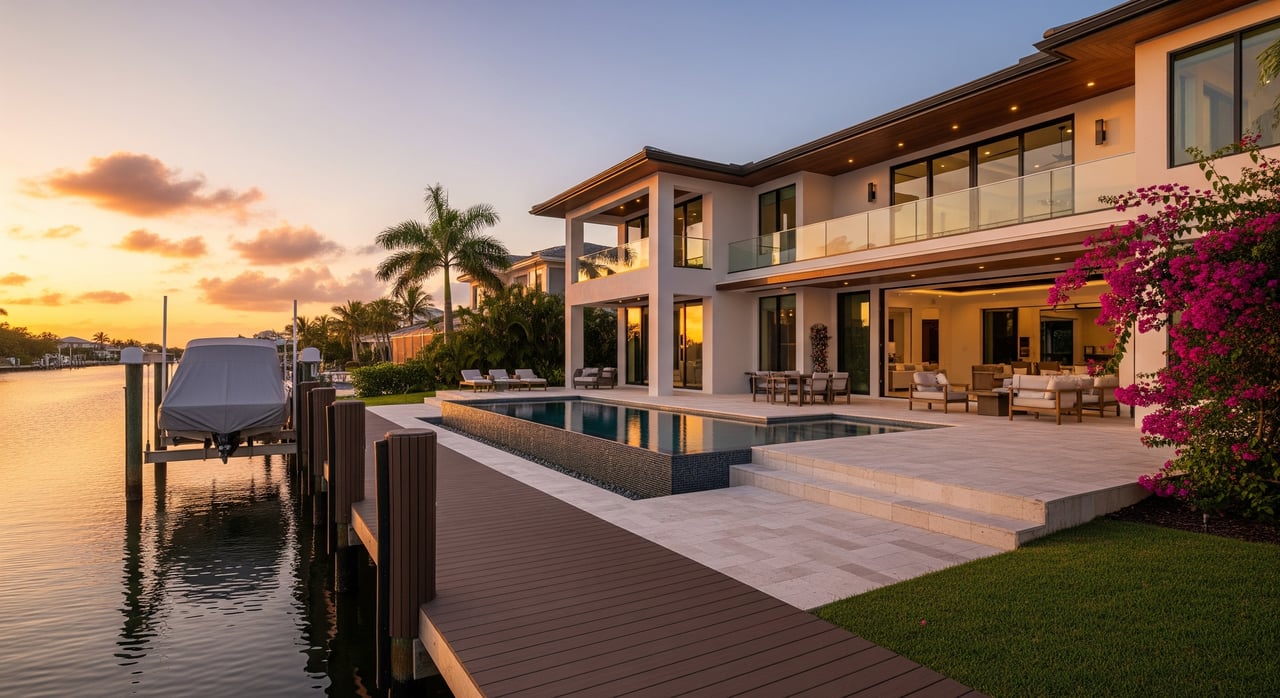
Pricing a Cape Coral canal home is not the same as pricing an inland property. Water access, seawall condition, and flood risk can shift your value by six figures, even when the homes look similar on paper. If you are thinking about listing, you want clarity on what matters most, how to select the right comparables, and when timing gives you an edge. This guide breaks down each value driver and gives you a practical plan to price with confidence. Let’s dive in.
What drives waterfront value
Pricing a waterfront home in Cape Coral starts with the water itself. The canal type, route to open water, and marine infrastructure at your property set the baseline for buyer demand and price.
Canal access type
Not all canals are equal in Cape Coral, and buyers pay different premiums based on access.
- Direct open-water access to the Caloosahatchee River or Matlacha Pass without low fixed bridges carries the highest premium for boaters.
- Indirect access with longer canal routes or low fixed bridges still holds value, but the premium varies by boat size and draft.
- Inland or non-navigable canals offer views and a waterfront setting, but the boating premium is limited.
Buyers who plan to use a boat expect reliable access. Restrictions, long transit times, or bridge height limits can trim the premium significantly.
Dock, lift, and depth
Boat owners look closely at your dock and lift. They want to see usable depth at mean low tide and a permitted structure in good working order.
- Presence and condition of a dock
- Lift capacity, age, and electrical hookups
- Pilings, cleats, and deck condition
A well-maintained, permitted dock with a functional lift often increases buyer interest and supports stronger pricing. An unpermitted or failing dock becomes a negotiation point and can reduce your net.
Seawall condition
Seawalls are high-cost items and a major confidence factor. Visible settling, leaning, cracks, or an aging cap can cause buyers to discount offers. Documentation helps.
- Recent inspections, permits, and warranties reduce uncertainty
- Evidence of permitted repairs supports your asking price
If the seawall is near end of life, you can price accordingly or consider credits. Transparency preserves negotiating power.
Outdoor living and pool
Pools, lanais, and outdoor kitchens are prized in Cape Coral’s climate. Their value depends on condition, age, and how well the space connects to the water view.
- Screened enclosures, upgraded surfaces, and thoughtfully oriented seating areas raise appeal
- Clean landscaping and simple erosion control reduce perceived maintenance
Roof, HVAC, and major systems
Waterfront exposure can accelerate wear on metal components. Buyers pay attention to the age and condition of roofs, HVAC systems, water heaters, and electrical panels.
- Recent service records, inspections, or transferable warranties lower perceived risk
- Hurricane shutters, impact windows, and generator hookups add peace of mind
Flood risk and insurance
Many Cape Coral waterfront homes sit in FEMA flood zones influenced by tidal or surge risk. Insurance requirements and premiums affect affordability and demand.
- Flood zone determination, current policy, and estimated premiums help buyers make decisions
- FEMA’s Risk Rating 2.0 and ongoing map updates can change premiums and perceptions
Navigation constraints
Bridge heights, locked basins, or restricted waterways can limit boat size and access. Simple facts like maximum boat height, draft considerations, and estimated transit time to open water help buyers align expectations with reality.
Build reliable comps
Selecting comps for a waterfront home requires more precision than for inland properties. Focus on what makes your slice of water unique.
Choose the right comps
Start with your canal and move outward only when necessary.
- Prioritize recent sales on the same or immediately adjacent canals with the same access type
- Match dock and lift features, seawall condition, pool presence, lot orientation, and major updates
- Use the last 6 to 12 months when possible, and note any market direction if you expand the window
A sale on your canal with similar boat access often beats a closer home with unlike access.
Quantify key adjustments
Some adjustments matter more than others on the water.
- Access type is often the largest pricing adjustment
- Dock and lift presence and condition carry meaningful value
- Seawall age, repairs, and documentation affect both price and time to close
- Pool and outdoor integration add more value when the water view is well framed
- System ages matter, especially with sea-spray corrosion over time
Document each difference and the rationale for your adjustments. Clear notes help avoid appraisal gaps.
Head off appraisal gaps
Appraisers need truly comparable waterfront sales. Using inland comps or access-mismatched sales can misstate value.
Reduce risks by preparing a package before you list:
- Dock and lift permits, maintenance records, and photos
- Seawall inspection reports, repair permits, and any warranties
- Flood zone determination and current insurance details
- Notes on canal access type, route to open water, and bridge constraints
Providing this evidence upfront supports your price and streamlines underwriting.
Time your list price
Seasonality matters in Southwest Florida. Buyer traffic typically rises from fall through spring, especially among out-of-state and seasonal buyers who prioritize waterfront living.
Peak season vs off-season
- Peak season often expands the buyer pool for waterfront homes and can improve odds of multiple offers on desirable properties. Competition among listings can also increase.
- Off-season can still work, but plan for longer marketing times or modest concessions to bridge the smaller buyer pool.
Align your pricing with inventory, interest rates, and demand. Local MLS and association reports are useful for current days-on-market trends.
Price ranges and expectations
Set a realistic pricing band tied to your goals:
- Conservative pricing for faster movement and reduced risk of appraisal gaps
- Market pricing aligned to recent comps with similar access and features
- Aggressive pricing with an expectation of longer time on market or targeted concessions
Be transparent about any major defects or unpermitted work. Pricing to reflect known issues keeps trust intact and negotiations cleaner.
Pre-listing checklist
A well-prepared file helps you price with confidence and support your number during negotiations.
- Seawall: recent inspection report, repair permits, warranties
- Dock and lift: permits, lift capacity, maintenance records, clear photos
- Roof and HVAC: age documentation, recent service or inspection reports
- Flood info: current flood zone, past claims if any, current policy and estimated premiums
- Permits and disclosures: additions, seawall or dock work, major renovations
- Marketing assets: professional photos and drone images that show canal position, dock, and route to open water
Small tune-ups can also help. Fresh seawall staining, dock surface repairs, pool servicing, and staging outdoor spaces raise perceived value.
Market a waterfront listing
Waterfront buyers evaluate both lifestyle and technical details. Your marketing should answer lifestyle questions and boating questions at the same time.
Must-have visuals
- Aerial and drone footage showing canal context and proximity to open water
- Water-level and dock-level shots that reveal lift, depth cues, and usable space
- Lifestyle photos of the pool, lanai, and outdoor dining areas
Boat access details
Spell out the facts in your listing copy and property documents:
- Canal classification and approximate transit time to open water
- Presence and height of fixed bridges and any practical boat size limits
- Notes on tidal or seasonal depth factors, when known
Showings that sell
- Schedule to capture the best light on the water and backyard
- Ensure safe, clear access to the dock and lift
- Provide a simple boaters’ factsheet that summarizes access, bridge heights, and typical routes
Digital targeting
Use accurate, conservative terms buyers search for. If you have direct access, say so. If access is indirect with a fixed bridge, state it clearly. Match MLS keywords and map-based marketing to the real attributes so you attract the right buyers and reduce renegotiation.
Put it all together
When you pull these pieces together, your pricing strategy becomes clear. Anchor your price to nearby closed sales with the same canal access, adjust for dock, lift, and seawall, and present a tight file of permits and inspections. Align your list timing with seasonal demand and local inventory, and market the boat lifestyle with honest, specific details. That combination helps you justify your price and move smoothly from listing to close.
Ready to price your Cape Coral waterfront home with clarity and confidence? Reach out to Amber Reyes for a tailored pricing plan, professional marketing, and a concierge-level listing experience. Get your free home valuation.
FAQs
How much more is a waterfront home worth in Cape Coral?
- There is no single percentage; premiums vary by canal access type, dock and lift condition, seawall status, and current market conditions, with direct open-water access usually commanding the largest premium.
Should I fix my seawall before listing my canal home?
- If there are visible issues, repairing or at least providing a certified inspection and estimate reduces buyer uncertainty and supports your price, with credits as an option if full repairs are impractical.
Does listing during peak season improve my sale price?
- Peak season typically increases buyer traffic for waterfront homes and can improve the chance of multiple offers, though inventory levels and competition also play a role.
How do I choose comps if there are few sales on my canal?
- Broaden to similar canal types with comparable access and dock features, extend the time window if needed, and make explicit adjustments for access, dock, lift, seawall, and system ages.
What documents should I have ready for waterfront buyers?
- Seawall and dock permits and inspections, flood zone and insurance details, roof and HVAC records, and clear photos and drone images that show canal context and the route to open water.