
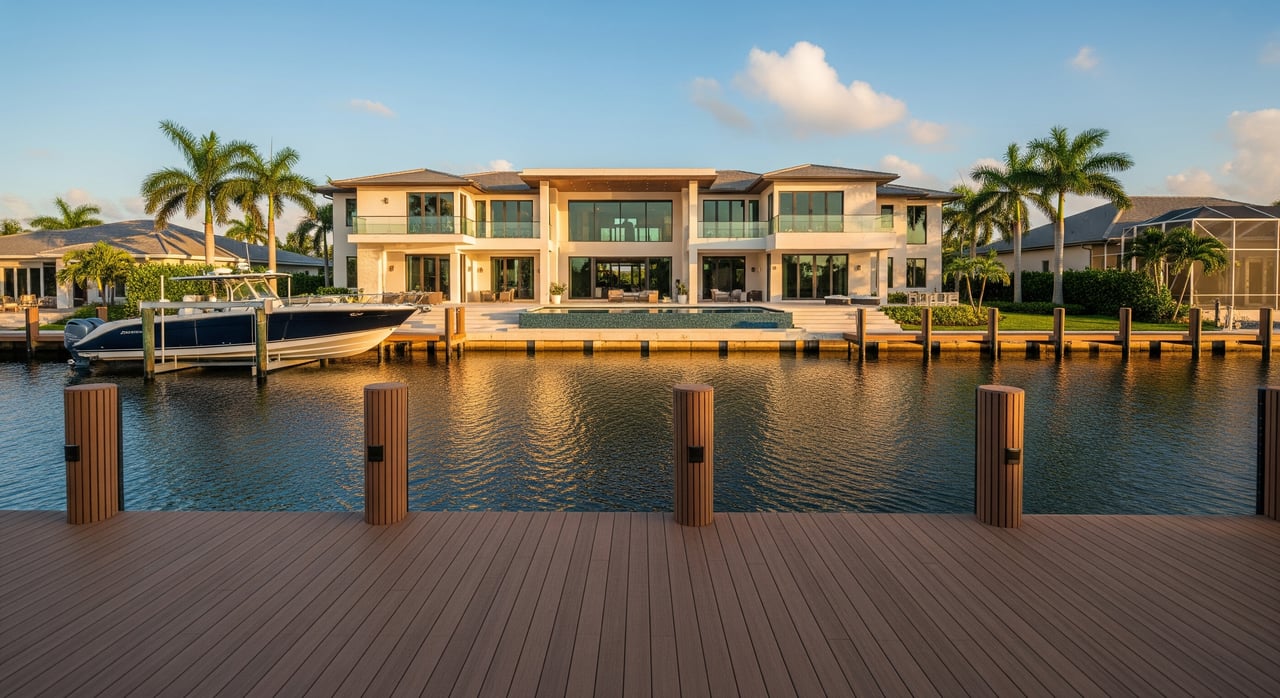
Shopping for a waterfront home in Cape Coral? The canal in your backyard can make or break your boating life, resale value, and day-to-day comfort. If you want quick trips to open water, smooth docking, and an outdoor space you will actually use, a little due diligence goes a long way. In this guide, you will learn what to look for in canals, bridge clearances, seawalls, docks, permits, and lanai orientation so you can buy with confidence. Let’s dive in.
Know your canal type
Cape Coral’s man-made canal system varies a lot, and the canal you choose shapes your boating experience.
- Through-canals: Wider and deeper with routes toward the Caloosahatchee River and the Gulf. Expect more boat traffic and faster access.
- Dead-end canals: Quieter with limited navigation. Larger boats may need extra maneuvering space.
- Small residential canals: Narrower and sometimes shallower. Great for smaller powerboats, kayaks, and paddleboards, but not ideal for deeper-draft vessels.
- Back or secondary canals: Typically calmer and less exposed. Docking options can be more limited depending on width and orientation.
Choose based on your boat type and how often you plan to use it. Larger powerboats and sailboats need deeper, wider channels and clear, direct routes. Quieter canals often trade convenience for lower noise and sometimes lower price.
Bridge clearance and routes
Understand the access category before you fall in love with the view.
- Direct or no-bridge access: Fastest route to the estuary or Gulf.
- Routes with fixed bridges: Check posted vertical clearances against your boat’s air draft.
- River or Intracoastal routes: Access via the Caloosahatchee River or Matlacha Pass may involve longer transits and different bridge limits.
Know your boat’s height above the waterline and compare it to posted bridge clearances along your intended path. Local charts and bridge signage list clearances. Confirm both charted and current conditions when possible.
Depth, tides, and draft
Depth at your seawall and in the canal channel matters. Some residential canals are dredged to navigable depths, while others are shallow and restrict larger boats.
- Check depth at low tide at the seawall and in the nearest channel.
- Southwest Florida tides are modest, but they still matter for marginal draft boats and shallow bars.
- Use local nautical charts and tide tables for the Caloosahatchee and Matlacha Pass area when planning routes.
If your boat sits low in the water, verify depth in person at low tide and, if possible, make a test run to open water.
Seawalls, docks, and lifts
These items protect your property and your boat, and they affect value.
- Seawalls: Condition and age are big-ticket items. Look for bowing, leaning, cracks, undermining, or tie-back issues. Repairs or replacement can be costly.
- Dock types: Fixed, floating, T-docks, and side-tie setups. The right choice depends on canal width, depth, and your boat’s size.
- Lifts and davits: Add convenience and protection. Verify electrical service, structural capacity, motor condition, and rated load.
Hire a licensed marine or seawall contractor to inspect these elements before you buy. Request maintenance records and any as-built drawings.
Permits and approvals
Always verify permits and approvals for existing and planned work.
- Local permits: Check the City of Cape Coral and Lee County permit history for seawalls, docks, and lifts on the property record.
- State and federal: Some projects, especially those touching tidal waters or submerged lands, may require approvals from the Florida Department of Environmental Protection or the U.S. Army Corps of Engineers.
- Environmental rules: Mangrove trimming, seagrass protections, and other rules may limit what you can do along the shoreline.
Unpermitted work can lead to retroactive permits, required changes, or removal. Confirm before you commit.
Orientation and outdoor living
The lanai is where you will spend a lot of time. Orientation affects comfort in every season.
- South-facing: Warm winter sun and abundant light. Expect strong sun in summer without shading.
- West-facing: Bright afternoon and evening light, plus heat in summer. Plan for shade and cooling solutions.
- East-facing: Morning sun with cooler afternoons. Comfortable for daytime use in warmer months.
- North-facing: Mostly shaded and cooler year-round, with limited direct sun.
Popular upgrades include screen enclosures, hurricane-rated glazing, shade systems, outdoor kitchens, pools and spas, composite decking, and non-slip surfaces. Add dock lighting, shore power, and water service for easier boat care. Use strategic landscaping for shade and privacy while respecting local species and mangrove rules.
What drives price and enjoyment
Certain features consistently influence value, insurance, and long-term enjoyment.
- Access to open water: Direct, no-bridge access commands a premium. Longer routes or bridge limits reduce convenience for active boaters.
- Seawall condition: A major negotiation point. Document age, repairs, and permit history.
- Dock and lift quality: Professionally installed, permitted structures add value.
- Canal width and depth: Wider, deeper canals better accommodate larger boats and reduce wake issues.
- Lot orientation and outdoor upgrades: South or west exposures and well-designed lanais add appeal for seasonal use.
- Traffic and privacy: Busy canals can be noisy. Proximity to marinas and launches adds convenience but may increase boat traffic.
Insurance and flood factors
Waterfront homes often require flood insurance, and premiums vary by flood zone and elevation. Review FEMA flood maps and any available elevation certificate for the property. Wind and hurricane coverage also matter. Keep documentation for hurricane-resistant features and any retrofits. Confirm any permitting liabilities early to avoid surprise costs.
Buyer checklist
Use this quick list to streamline your search and protect your budget.
- Request permits and maintenance records for seawall, dock, and lift.
- Order seawall and dock inspections from licensed marine pros.
- Verify canal depth at low tide and bridge clearances along planned routes.
- Obtain flood zone details, an elevation certificate if available, and preliminary insurance quotes.
- Confirm HOA or city rules on boat trailers, storage, and dock structures.
- Walk the canal frontage at low tide and, if possible, run the route to open water.
- Budget for near-term seawall or dock work if inspections note issues.
Work with a local guide
The right Cape Coral waterfront home is about more than the view. It is about how you will use the water every week and whether the property supports that lifestyle without surprise costs. If you want a calm, informed process with trusted local inspectors, marine contractors, and insurance partners, reach out to Amber Reyes. You will get clear guidance, strong negotiation, and a smooth path from search to closing.
FAQs
What canal type is best for my boat in Cape Coral?
- Match your boat’s draft, beam, and air draft to canal width, depth, and bridge clearances, then choose through-canals for quick access or quieter dead-ends for lower traffic.
How do bridge clearances impact sailboats in Cape Coral?
- Compare your mast height to posted bridge clearances on your planned route and favor no-bridge or higher-clearance paths if you need unobstructed access.
What should I inspect on a seawall before buying in Cape Coral?
- Have a licensed marine contractor check for bowing, leaning, cracks, undermining, and tie-back issues, and review permits and repair records.
Are permits required for docks or lifts in Cape Coral?
- Usually yes, with City or County permits plus possible state or federal approvals for tidal or submerged-land impacts, so always verify property permit history.
How does lanai orientation affect comfort in Cape Coral?
- South gets winter sun, west gets strong afternoon heat, east has cooler afternoons, and north is mostly shaded, so plan shading or glazing accordingly.
How should I evaluate canal depth and tides in Cape Coral?
- Check depth at your seawall and in channels at low tide, review local charts and tide tables, and test-run the route if your boat has marginal draft.